Discover Your Daily
Astrology Reading

Reveal your astrological sign with your free daily astrology reading — uncover insights into your personality and illuminate the path ahead.

Free Daily Horoscope Reading

So, What Are Astrology Signs?

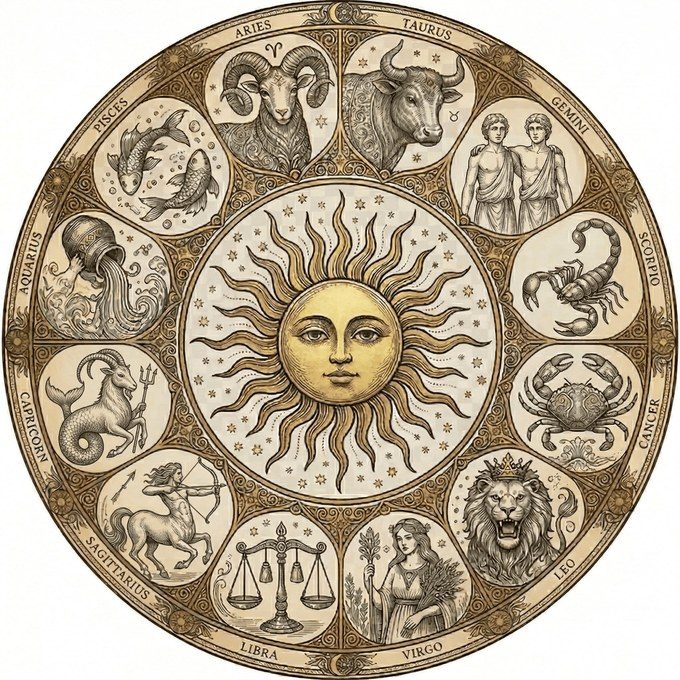
Astrology signs are 12 archetypal patterns, each with unique strengths, weaknesses, and traits that shape the way we experience life. In Western astrology, each sign occupies 30 degrees of the 360-degree ecliptic — the Sun's apparent path through the sky. Your birth chart maps exactly where every planet stood the moment you arrived in this world.

These charts, crafted from your birth time, date, and location, become a living map of your character, purpose, and potential. Astrologers use them to interpret not just who you are, but the rhythms and seasons of your life — where to lean in, where to tread carefully, and what the cosmos has in store.

Today, most people encounter astrology through their daily horoscope reading — a practical window into the energies at play each day, offering guidance for decisions, relationships, and personal growth.

Daily Astrology Reading

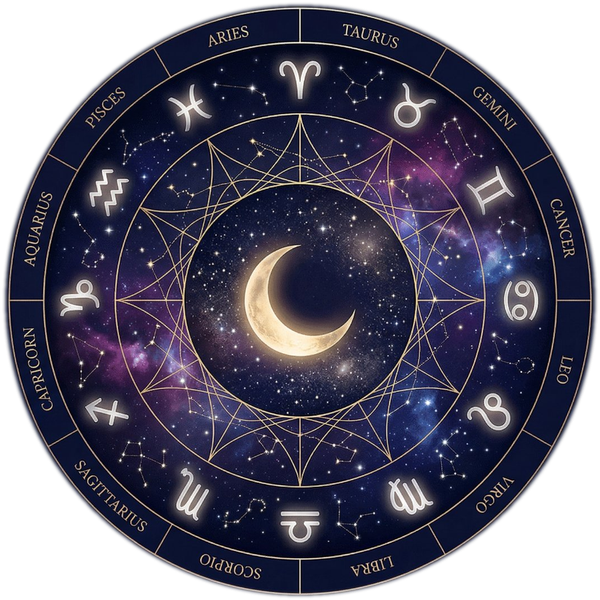
Choose Your Astrology Sign Below

Click on your zodiac sign to reveal your personalised daily reading for today

Daily Astrology Blog

Explore our latest articles on astrology, tarot, numerology and the mystical arts

✦ Your Daily Guidance ✦

Daily Horoscope Reading

The Stars Have Spoken Today

Your free daily horoscope is ready. Discover what the cosmos has aligned for you — gain insight, clarity and a roadmap for navigating today's opportunities and challenges.

Remarkably Accurate Horoscopes For Every Zodiac Sign

There are endless possibilities in life and no one can pinpoint exactly what each day will bring. However, your daily horoscope acts as a cosmic compass — guiding you to be diligent, alerting you that love may be near, or confirming that fortune is on your side. Tomorrow brings an entirely new forecast. Are you ready to discover what today holds?

What Is a Daily Horoscope?

A daily horoscope is an astrological forecast based on the position of the Sun, Moon and planets relative to your zodiac sign at any given day. Astrologers study these planetary movements — called transits — and interpret how their energy influences each of the 12 signs. Whether you're an Aries charging ahead, a Taurus seeking stability, or a Pisces following your intuition, your daily horoscope offers a personalised cosmic snapshot to help guide your decisions, relationships and inner growth.

At Your Astrology Today, our free daily horoscope readings are freshly generated every day for all 12 zodiac signs — covering love, career, finances and spiritual wellbeing. Simply click your sign below to receive your reading.

Daily Horoscope

Click on your zodiac sign to reveal your daily horoscope for today

✦ This reading is freshly generated for you today. Return tomorrow for a new forecast.

✦ Divine Guidance ✦

Daily Oracle Tarot Reading

Discover the true meaning behind the cards you choose and how they relate to your current situation in life. Pick 3 cards — hold a question in your heart — and let the Oracle speak.

Tarot Card Reading by the Oracle

Daily tarot reading operates through a principle known as synchronicity — the meaningful coincidence of events. The card you choose is precisely what your higher self already knows; it is often called "the conversation with your inner wisdom." This is not magic — tarot is a sacred mirror, reflecting back what you most need to see. Let your cards tell your story today.

Daily Tarot Card

Receive definitive guidance — pick up to 3 cards, one at a time, with a question in mind

Pick Card 1 of 3 — Hold your question in mind, then select a card
Selected:
1
2
3
🎴

Your 3-Card Reading

✦ Each card reading is divined fresh for you. The cards have spoken for today.

✦ Tasseography ✦

Tea Leaf Prediction

The Secrets of the Tea Leaf

Today's secrets lie at the bottom of the teacup. What does your future hold? Discover your fortune in the dregs — opening a window into another world.

Pick Your Teacup

Fortune-Telling Tea Cups

Tasseography (also called tasseomancy) is a form of divination dating back thousands of years, first practised in ancient China. It involves interpreting the patterns that tea leaves form at the bottom of a cup after the liquid has been consumed.

Over centuries, a rich symbolic vocabulary developed around the shapes and clusters that appear. The practice grew widely popular during the seventeenth century when Dutch merchants introduced loose-leaf tea to Europe. Today, millions around the world still look to the leaves for insight — a tradition even featured in its own way in popular culture.

After finishing a cup of tea — poured without a strainer — drain the remaining liquid, then gaze into the cup. Allow your imagination to find shapes in the settled leaves. Today, let your choice of teacup reveal what the symbols say about your path ahead.

🫖

Daily Tasseography

Touch your desired teacup to reveal your interpretation for today

🫖

✦ The leaves have settled with a message for you today.

✦ Numerology ✦

Daily Angel Number

The Angels Are Speaking Today

If you keep seeing the same number repeat, your guardian angels are sending you a message. Connect with your angel number below and receive their personalised guidance for today.

What is Numerology?

Numerology is the study of numbers and their profound influence on our lives. By examining the numbers that appear in your world — your birth date, name, and the sequences that catch your eye — numerology reveals deep truths about your personality, purpose, and destiny. Often called the universal language of numbers, it teaches that the universe itself is structured mathematically, and that each number vibrates with a specific energy and meaning. When you repeatedly encounter a particular sequence, the cosmos is sending a signal. Are you ready to decode it?

Daily Angel Number

Touch the number that keeps appearing in your life to receive its hidden personal message

✦ Your angels send you a fresh message each day. Return tomorrow for new guidance.

✦ Astrology & Spirituality ✦

Astrology Today Blog

Articles on astrology, tarot, numerology, tea leaf reading and the ancient wisdom traditions that help us navigate modern life.

✦ Astrology ✦

What Your Rising Sign Reveals About Your True Personality

What Your Rising Sign Reveals About Your True Personality

While your sun sign gets all the attention, astrologers agree that your rising sign — also called the ascendant — is equally, if not more, revealing. It shapes how the world sees you, how you present yourself, and how you instinctively respond to life.

What Is a Rising Sign?

Your rising sign is the zodiac sign that was ascending on the eastern horizon at the precise moment of your birth. Unlike your sun sign, which is determined solely by your birth date and changes roughly once a month, the rising sign shifts every two hours — which is why knowing your exact birth time is so important in astrology.

In a birth chart, the rising sign marks the first house — the house of self, identity and physical appearance. It is the lens through which your entire chart is filtered, and it colours every other planetary placement in your horoscope. Many astrologers consider it the most personal point in the chart precisely because of how time-sensitive it is.

The Difference Between Sun Sign, Moon Sign and Rising Sign

Think of these three as layers of your personality. Your sun sign represents your core identity — your ego, your conscious self, your life purpose. It is who you are when you feel most at home. Your moon sign governs your emotional world — your instincts, your inner needs, your relationship with comfort and security. Your rising sign is your social mask — it is who you appear to be when you first walk into a room.

This is why many people feel that their rising sign description fits them better than their sun sign, particularly in how others describe them. A Scorpio sun with a Sagittarius rising, for instance, may come across as outgoing, adventurous and jovial — quite different from the brooding intensity usually associated with Scorpio — while still carrying deep emotional undercurrents beneath the surface.

How Your Rising Sign Shapes First Impressions

Your rising sign is essentially your automatic pilot. It governs your instinctive reactions, your physical mannerisms, and the energy you project before you have had a chance to consciously present yourself. Aries risings stride into rooms with confidence and urgency. Libra risings enter with charm and a disarming smile. Capricorn risings carry themselves with quiet authority.

These impressions are not performances — they are deeply ingrained patterns established in early childhood, shaped by environment, family dynamics and formative experiences, all filtered through the energy of the ascendant sign.

Rising Signs and Physical Appearance

Classical astrology associates each rising sign with certain physical characteristics. Taurus risings are often described as having strong, sturdy builds and warm, sensual features. Gemini risings tend to have quick, expressive eyes and an animated, youthful appearance. Leo risings frequently have prominent hair and a naturally regal bearing. While these are general archetypes rather than absolute rules, many astrologers find them surprisingly accurate in practice.

Each Rising Sign at a Glance

  • Aries Rising: Bold, direct, energetic first impression. Often appears confident and in a hurry.
  • Taurus Rising: Calm, steady, sensual. Projects reliability and groundedness.
  • Gemini Rising: Witty, curious, expressive. Comes across as young, quick and sociable.
  • Cancer Rising: Nurturing, gentle, protective. Gives an approachable, homely warmth.
  • Leo Rising: Magnetic, theatrical, generous. Commands attention naturally.
  • Virgo Rising: Precise, observant, modest. Appears organised, analytical and quietly helpful.
  • Libra Rising: Charming, diplomatic, elegant. Puts others at ease immediately.
  • Scorpio Rising: Intense, mysterious, penetrating. Has a magnetic and slightly unsettling presence.
  • Sagittarius Rising: Optimistic, adventurous, blunt. Projects enthusiasm and restlessness.
  • Capricorn Rising: Serious, composed, authoritative. Exudes competence and self-discipline.
  • Aquarius Rising: Eccentric, detached, progressive. Comes across as unique and forward-thinking.
  • Pisces Rising: Dreamy, compassionate, fluid. Has a soft, otherworldly quality.

How to Find Your Rising Sign

To calculate your rising sign accurately, you need your date of birth, your city of birth, and ideally your exact time of birth to within a few minutes. Many free birth chart calculators are available online — simply enter your details and look for "Ascendant" or "Rising" in the results. If you do not know your exact birth time, your birth certificate or hospital records are usually the best source.

Working With Your Rising Sign

Once you know your rising sign, you can begin to understand the gap — if there is one — between who you feel you are on the inside and how others perceive you. This awareness alone can be profoundly liberating. You may stop wondering why people see you as reserved when you feel so warm inside, or why others gravitate to you as a leader when you feel uncertain of your direction. Your rising sign is not a mask you put on — it is a genuine part of you, and learning to honour it rather than resist it is one of the most valuable gifts astrology can offer.

✦ Astrology ✦

Mercury Retrograde 2026: What It Really Means and How to Survive It

Mercury Retrograde 2026: What It Really Means and How to Survive It

Three or four times a year, Mercury appears to reverse its course through the sky — and for those who follow astrology, the groans are audible worldwide. Missed messages, technology failures, travel delays and miscommunications seem to multiply. But is Mercury retrograde really to blame, and what can you actually do about it?

What Is Mercury Retrograde?

From an astronomical standpoint, Mercury retrograde is an optical illusion. Mercury does not actually reverse direction — no planet does. What happens is that Mercury, which orbits the Sun faster than Earth, periodically appears to move backwards through the zodiac when viewed from our planet. This is similar to the experience of sitting in a faster-moving train and watching a slower train appear to move backwards as you overtake it.

Mercury retrograde occurs approximately three to four times per year, lasting about three weeks each time. In 2026, astrologers mark several retrograde periods that will influence communication, contracts and travel across different zodiac signs and elements.

Why Does Mercury Retrograde Matter in Astrology?

In astrology, Mercury governs communication in all its forms — speech, writing, negotiation, contracts, technology, travel and commerce. It rules the signs of Gemini and Virgo, and its influence permeates the daily logistics of modern life. When Mercury stations retrograde, astrologers interpret this as a time when Mercurial matters become disrupted, delayed or turned inward for review.

The key word that most serious astrologers associate with Mercury retrograde is not chaos — it is revision. The prefix "re-" is highly significant: retrograde periods are traditionally associated with reviewing, revisiting, reconsidering, reconnecting and rethinking. It is a cosmically enforced pause on forward momentum, inviting us to look back before charging ahead.

What Tends to Go Wrong

While not everything that misfires during Mercury retrograde is caused by it — confirmation bias plays a real role in how people interpret these periods — there are some genuinely common themes that astrologers and their clients report consistently:

  • Communication breakdowns: Emails sent to the wrong person, messages misunderstood, conversations that go in circles.
  • Technology glitches: Computers crashing, phones malfunctioning, software bugs surfacing at inconvenient times.
  • Travel disruptions: Delays, missed connections, lost luggage and booking errors.
  • Contract complications: Fine print overlooked, agreements that need renegotiation, terms that were not clearly understood.
  • Old people and situations resurfacing: Ex-partners making contact, old friends reappearing, unresolved situations returning for another round.

What You Should and Should Not Do

Traditional astrological guidance cautions against starting major new ventures, signing contracts, making large purchases (especially technology), or launching important projects during Mercury retrograde. The logic is that anything begun under this influence tends to require revision or may not proceed as planned.

However, retrograde periods are considered excellent for activities beginning with "re-": research, rest, reflection, reviewing old projects, reconnecting with people from your past, revising plans, and resolving unfinished business. Think of it less as a danger zone and more as a maintenance window.

Mercury Retrograde Through the Signs

The zodiac sign in which Mercury goes retrograde adds a specific flavour to the period. Mercury retrograde in Aries tends to affect impulsive decisions and heated arguments. In Virgo, it may bring perfectionism to paralyzing levels and disrupt health routines. In Scorpio, secrets and hidden information tend to surface. In Pisces, boundaries become blurred and creative projects may lose direction before finding a better one.

The Shadow Periods

Many astrologers also pay attention to the "shadow periods" — the weeks before and after the official retrograde, when Mercury is slowing down or speeding back up. Some consider these windows almost as significant as the retrograde itself, and advise exercising similar caution. The pre-shadow period is when issues first emerge; the post-shadow is when the lessons are integrated.

A More Balanced Perspective

It is worth noting that roughly one third of the world's population is born during Mercury retrograde — and many of them are perfectly capable communicators, innovators and travellers. Natal Mercury retrograde in a birth chart is actually associated with a deeply internalised, reflective thinking style, often producing exceptional writers, thinkers and strategists.

The most productive approach to Mercury retrograde is not fear, but mindfulness. Back up your devices. Read contracts twice. Allow extra time for travel. Clarify rather than assume. And embrace the invitation to slow down, look back, and ensure your foundations are solid before the planet stations direct and life surges forward again.

✦ Angel Numbers ✦

Angel Numbers Explained: Why You Keep Seeing the Same Numbers Everywhere

Angel Numbers Explained: Why You Keep Seeing the Same Numbers Everywhere

You glance at your phone — 11:11. You pull a receipt and the total is $2.22. Your Uber driver's plate ends in 333. Coincidence? Millions of people around the world believe these recurring numerical sequences are anything but random. They call them angel numbers.

What Are Angel Numbers?

Angel numbers are sequences of numbers — often repeated digits like 111, 222, 444 or 1111 — that appear repeatedly and seemingly at random in everyday life. The concept draws on the ancient practice of numerology, the study of the symbolic meaning of numbers, combined with the spiritual belief that guardian angels, spirit guides or the universe communicate with us through signs and symbols in the physical world.

The modern popularisation of angel numbers is largely attributed to Doreen Virtue, a spiritual author who wrote extensively on the topic in the early 2000s. However, the roots of numerological interpretation stretch back thousands of years to Pythagoras, the ancient Greek philosopher and mathematician who believed that numbers were the fundamental building blocks of the universe and carried deep spiritual meaning.

How Do Angel Numbers Work?

According to numerological and spiritual belief, each number carries a specific vibration and meaning. When a particular number or sequence appears to you repeatedly — on clocks, license plates, receipts, phone numbers, page numbers, or anywhere else — it is considered a message from a higher intelligence drawing your attention to that number's energy and guidance.

The experience is inherently personal. The same number can carry different specific messages for different people depending on what is happening in their lives at that moment. A person going through a career change who repeatedly sees 555 (associated with major change and transformation) may interpret this very differently from someone navigating a new relationship who sees the same sequence.

The Most Common Angel Numbers and Their Meanings

  • 111 or 1111 — Manifestation and New Beginnings: Your thoughts are manifesting rapidly. Stay focused on what you want rather than what you fear. A powerful gateway is open.
  • 222 — Balance and Alignment: Trust the process. Things are aligning behind the scenes even if you cannot see it yet. Keep the faith and maintain equilibrium.
  • 333 — Divine Support and Creativity: Your angels and guides are close. You are supported, protected and encouraged to express your authentic self.
  • 444 — Protection and Stability: You are surrounded by loving, protective energy. The hard work you have been doing is building solid foundations.
  • 555 — Major Change Incoming: Significant transformation is on its way. Release what no longer serves you and embrace the new direction emerging.
  • 666 — Rebalance and Reflect: Gently redirects attention inward. A call to reassess priorities, particularly around material concerns versus spiritual wellbeing.
  • 777 — Spiritual Luck and Wisdom: You are on the right path spiritually. Breakthroughs, luck and deep insight are available to you now.
  • 888 — Abundance and Infinite Flow: Financial and energetic abundance is flowing toward you. Receive with gratitude.
  • 999 — Completion and Release: A chapter is closing. Let go gracefully to create space for the extraordinary new beginning waiting ahead.
  • 1010 — Awakening and Higher Purpose: Your spiritual journey is accelerating. Pay attention to intuitive nudges and synchronicities.
  • 1111 — The Master Gateway: Perhaps the most recognised angel number. A powerful sign of awakening, alignment and the universe saying yes to your desires.
  • 1212 — Alignment and Ascension: You are stepping into a higher version of yourself. Trust the path even when it is not fully visible.

The Psychology Behind Angel Numbers

Sceptics rightly point out the role of confirmation bias — the human tendency to notice and remember events that confirm existing beliefs while ignoring contradicting evidence. Once you start looking for 11:11, you will see it far more often, not because it appears more frequently but because your attention has been primed to notice it.

However, dismissing angel numbers purely as confirmation bias misses something important: the meaning people derive from them, and the positive behavioural changes that can result. If seeing 444 during a moment of anxiety genuinely calms someone and helps them feel supported, and if that sense of support helps them make a clearer decision — then the practical effect is real, regardless of the metaphysical explanation.

How to Work With Angel Numbers

When you notice an angel number, the most useful practice is to pause and check in with yourself. What were you thinking about in the moment before you saw it? What situation in your life does the number's message speak to? Keeping a journal of when you see specific numbers and what was on your mind can reveal fascinating patterns and provide genuine insight over time.

Angel numbers are not instructions to be followed blindly — they are invitations to reflect. Use them as a gentle prompt to slow down, pay attention, and reconnect with your own intuition. In a world of relentless noise and distraction, that invitation alone has real value.

✦ Tarot ✦

Tarot Cards for Beginners: A Complete Guide to the 78-Card Deck

🌙

Tarot Cards for Beginners: A Complete Guide to the 78-Card Deck

Tarot has captivated seekers, mystics and the simply curious for centuries. Yet for many newcomers, the prospect of 78 cards — each with its own imagery, symbolism and multiple possible meanings — feels overwhelming. This guide cuts through the complexity and gives you a clear, practical foundation.

A Brief History of Tarot

Contrary to popular belief, tarot cards did not originate as a mystical divination tool. The earliest decks appeared in northern Italy in the 15th century as playing cards for a game called tarocchi, similar to bridge. It was not until the 18th century, when French occultists began incorporating tarot into esoteric practice, that the cards took on the divinatory significance we associate with them today.

The Swiss-French occultist Antoine Court de Gébelin was among the first to claim — incorrectly, as it turned out — that tarot cards were derived from ancient Egyptian wisdom. While this theory has been thoroughly debunked by historians, it sparked a wave of occult interest in tarot that gave rise to the rich interpretive traditions we have inherited. The Rider-Waite-Smith deck, published in 1909 and illustrated by Pamela Colman Smith under the direction of Arthur Edward Waite, became the most influential tarot deck in history and forms the basis for most modern interpretations.

The Structure of the Tarot Deck

A standard tarot deck contains 78 cards divided into two main sections: the Major Arcana and the Minor Arcana.

The Major Arcana (22 cards)

The Major Arcana are numbered 0 through 21 and represent the major archetypes, themes and forces at play in human life. They are considered the most significant cards in a reading — when they appear, they signal that the matter at hand is of deep importance or that larger forces are at work. The sequence of the Major Arcana — from The Fool's innocent leap of faith through The World's triumphant completion — is often called the Fool's Journey, a metaphor for the soul's path through life.

Key Major Arcana cards include: The Magician (willpower and skill), The High Priestess (intuition and mystery), The Emperor (structure and authority), The Tower (sudden upheaval and revelation), The Star (hope and renewal) and Judgement (awakening and transformation).

The Minor Arcana (56 cards)

The Minor Arcana are divided into four suits, each containing 14 cards: Ace through Ten, plus four Court Cards (Page, Knight, Queen, King). Each suit governs a specific domain of life:

  • Wands (Fire): Passion, creativity, ambition, career and spiritual energy.
  • Cups (Water): Emotions, relationships, intuition, the unconscious and creative flow.
  • Swords (Air): Thoughts, conflicts, communication, decisions and mental clarity.
  • Pentacles (Earth): Material matters, finances, health, work and the physical world.

How to Read Tarot Cards

There is no single correct way to read tarot. Different traditions, schools and individual readers have developed vastly different approaches. However, a few principles apply broadly.

1. Learn the cards gradually

Rather than trying to memorise all 78 cards at once, work with one card a day. Draw a single card each morning, sit with its imagery, read about its traditional meaning, and then reflect on how its themes showed up in your day that evening. This method builds intuitive familiarity far more effectively than rote memorisation.

2. Trust your intuition

The images on tarot cards are designed to speak to the subconscious. Before consulting a guidebook, spend a few moments simply looking at the card you have drawn. What do you notice first? What feelings does it evoke? What story does the imagery suggest? Your immediate, intuitive response is often the most personally relevant interpretation.

3. Context is everything

A card's meaning shifts significantly depending on the question asked, the position in the spread and the cards surrounding it. The Death card — often feared by newcomers — almost never refers to physical death. In most contexts it signals transformation, endings that make way for new beginnings, or the need to release something that has run its course.

Simple Spreads for Beginners

Start with simple one or three-card spreads before attempting complex layouts like the Celtic Cross. A three-card spread of Past / Present / Future is one of the most versatile and accessible layouts in tarot, offering clear narrative context for any question while remaining manageable for beginners.

Caring for Your Deck

Many tarot practitioners develop personal rituals around their decks — storing them in a silk cloth or wooden box, cleansing them with smoke or moonlight, and keeping them in a special place. Whether or not you believe in the energetic significance of these practices, they serve a useful psychological function: they signal to your subconscious mind that tarot is a sacred practice worthy of focused, intentional attention. That shift in mindset tends to produce more insightful readings.

Is Tarot Psychic or Psychological?

This is perhaps the most interesting question in the tarot world, and experienced readers land on very different sides of it. Some view tarot as a genuinely psychic tool that taps into information beyond ordinary perception. Others — perhaps the majority of professional readers — view it primarily as a projective psychological tool: a structured way of exploring the unconscious mind, similar in some ways to Rorschach inkblot tests or Jungian active imagination. Carl Jung himself was deeply interested in tarot and saw in its archetypal imagery a reflection of the collective unconscious.

The practical answer is that tarot works, regardless of which explanation you favour. The cards provide a framework for reflection, a language for discussing complex inner states, and a mirror that can reveal what we already know but have not yet acknowledged. That alone makes them a remarkable tool.

✦ Tea Leaf Reading ✦

The Ancient Art of Tea Leaf Reading: A Complete History of Tasseography

🫖

The Ancient Art of Tea Leaf Reading: A Complete History of Tasseography

Long before tarot cards arrived in Europe, and centuries before crystal balls became shorthand for fortune-telling, people were reading the future in the dregs of their teacups. Tasseography — the art of reading tea leaves — is one of the oldest and most quietly enduring forms of divination in the world.

Origins: Where Did Tea Leaf Reading Come From?

The origins of tasseography (from the French tasse, meaning cup) are genuinely ancient, though somewhat disputed among historians. The most widely accepted account traces the practice to China, where tea drinking itself was born. Chinese tradition holds that shortly after the discovery of tea by Emperor Shen Nong around 2737 BCE, people began noticing patterns in the leaves that settled at the bottom of their cups — and began attributing meaning to them.

Similar practices developed independently in other cultures. Ancient Greeks read patterns in wine sediment in a practice called oinomancy. Ancient Romans divined from the lees of olive oil. The underlying impulse — to find meaning and foresight in random patterns — appears to be a universal human trait, what psychologists today call pareidolia: the tendency to perceive meaningful patterns in ambiguous stimuli.

The Journey to Europe

Tea leaf reading as we know it in the Western tradition arrived in Europe primarily through two routes. The first was via Roma (Romani) fortune-tellers in the 16th and 17th centuries, who adapted and popularised various forms of divination including tasseography across Europe. The second, and more significant, was the arrival of loose-leaf tea itself in Europe.

When Dutch merchants introduced tea to Europe in the early 17th century — initially as a luxury item available only to the wealthy — the practice of tea leaf reading came with it. By the 18th and 19th centuries, as tea became increasingly affordable and its consumption spread across social classes, tasseography became a widespread parlour practice in Britain, Ireland and much of Western Europe. Victorian parlours were particular hotbeds of the practice, where reading the leaves was as much a social ritual as a divinatory one.

How Tasseography Works

The traditional method is beautifully simple. A cup of loose-leaf tea is brewed and consumed — never strained. The reader then asks the querent (the person seeking the reading) to swirl the remaining liquid three times with their non-dominant hand, turn the cup upside down onto the saucer, and leave it to drain for a moment.

The cup is then righted and examined. The tea leaves clinging to the interior of the cup have formed patterns, shapes and clusters. The reader gazes into the cup, allows their imagination to find forms in the patterns — just as one might find shapes in clouds — and interprets what they see according to the traditional symbolic vocabulary of tasseography.

The Symbolic Language of the Leaves

Over centuries of practice, a rich and widely agreed-upon vocabulary of symbols has developed. Shapes near the rim of the cup are considered most immediately relevant, while shapes near the base refer to the more distant future. Some of the most widely recognised symbols include:

  • Anchor: Stability, security and safe harbour ahead. A sign of grounded energy and reliable support.
  • Bird: Good news arriving, messages from afar, freedom and new horizons.
  • Butterfly: Transformation, rebirth and positive change. A highly auspicious symbol.
  • Cross: A challenge to be faced, or faith that will carry you through difficulty.
  • Crown: Success, achievement, recognition and the rewards of hard work.
  • Heart: Love, romance and matters of deep emotional significance.
  • Key: An opportunity unlocking, a secret revealed, or access to something previously out of reach.
  • Mountain: A significant challenge or obstacle — but also the satisfaction of achievement that awaits those who climb it.
  • Snake: Wisdom, transformation and the shedding of old skin. Also, in some traditions, a warning of deception.
  • Star: Hope, inspiration, divine guidance and the fulfilment of a wish.
  • Tree: Growth, deep roots and the strength that comes from your family or personal history.

Tasseography in Popular Culture

Tea leaf reading has never entirely left popular consciousness. Its most famous fictional appearance is in J.K. Rowling's Harry Potter series, where it is taught at Hogwarts as the subject of Divination by Professor Trelawney — portrayed with warm affection as an ancient if imprecise art. This portrayal introduced millions of younger readers to tasseography and sparked a genuine revival of interest in the practice.

Beyond fiction, tea leaf reading remains an active practice among professional readers, particularly in Ireland and Britain where the cultural connection to tea is strongest. A number of tea rooms in Edinburgh, Dublin and London still offer formal readings, and the practice has found a new generation of enthusiasts through social media and the broader modern interest in folk wisdom and slow living.

The Value of Reading the Leaves Today

What does tasseography offer the modern practitioner? At its most straightforward, it is a beautifully contemplative ritual in a world that rarely stops. The act of making and drinking a cup of loose-leaf tea, then spending quiet time gazing into the cup and allowing the imagination to move freely, is itself a form of mindfulness practice — a rare invitation to slow down, be present, and listen to the quieter channels of intuition that tend to get drowned out by modern noise.

Whether or not you believe that leaves can literally foretell the future, there is real wisdom in any practice that prompts you to reflect, pay attention, and approach your life with a sense of curiosity and wonder. In that sense, the art of reading the leaves is as relevant today as it has ever been.

✦ Astrology ✦

What Your Rising Sign Reveals About Your True Personality

What Your Rising Sign Reveals About Your True Personality

While your sun sign gets all the attention, astrologers agree that your rising sign — also called the ascendant — is equally, if not more, revealing. It shapes how the world sees you, how you present yourself, and how you instinctively respond to life.

What Is a Rising Sign?

Your rising sign is the zodiac sign ascending on the eastern horizon at the precise moment of your birth. Unlike your sun sign, which changes roughly once a month, the rising sign shifts every two hours — which is why knowing your exact birth time matters so much in astrology. It marks the first house of your chart: the house of self, identity and physical appearance.

The Difference Between Sun, Moon and Rising Sign

Think of these three as layers. Your sun sign is your core identity — your ego, your conscious self. Your moon sign governs your emotional world — your instincts and inner needs. Your rising sign is your social mask — how you appear when you first walk into a room. Many people find that others describe them more accurately through their rising sign than their sun sign.

How Your Rising Sign Shapes First Impressions

Your rising sign is your automatic pilot. It governs instinctive reactions, physical mannerisms and the energy you project before conscious thought kicks in. Aries risings stride into rooms with confidence. Libra risings enter with charm. Capricorn risings carry quiet authority. These patterns are deeply ingrained — established in early childhood and reinforced throughout life.

Each Rising Sign at a Glance

  • Aries Rising: Bold, direct, energetic. Often appears confident and in a hurry.
  • Taurus Rising: Calm, steady, sensual. Projects reliability and groundedness.
  • Gemini Rising: Witty, curious, expressive. Comes across as young and sociable.
  • Cancer Rising: Nurturing, gentle, protective. Gives an approachable warmth.
  • Leo Rising: Magnetic, theatrical, generous. Commands attention naturally.
  • Virgo Rising: Precise, observant, modest. Appears organised and quietly helpful.
  • Libra Rising: Charming, diplomatic, elegant. Puts others at ease immediately.
  • Scorpio Rising: Intense, mysterious, penetrating. Has a magnetic presence.
  • Sagittarius Rising: Optimistic, adventurous, blunt. Projects enthusiasm and restlessness.
  • Capricorn Rising: Serious, composed, authoritative. Exudes competence.
  • Aquarius Rising: Eccentric, detached, progressive. Comes across as unique and forward-thinking.
  • Pisces Rising: Dreamy, compassionate, fluid. Has a soft, otherworldly quality.

How to Find Your Rising Sign

To calculate your rising sign accurately, you need your date of birth, your city of birth, and your exact birth time. Many free birth chart calculators are available online — enter your details and look for Ascendant or Rising in the results. If you do not know your exact birth time, your birth certificate or hospital records are usually the best source.

Working With Your Rising Sign

Once you know your rising sign, you can begin to understand the gap — if any — between who you feel you are inside and how others perceive you. You may stop wondering why people see you as reserved when you feel so warm inside, or why others look to you as a leader when you feel uncertain. Your rising sign is not a mask you put on — it is a genuine and important part of you.

✦ Astrology ✦

Mercury Retrograde 2026: What It Really Means and How to Survive It

Mercury Retrograde 2026: What It Really Means and How to Survive It

Three or four times a year, Mercury appears to reverse its course through the sky — and for those who follow astrology, the groans are audible worldwide. Missed messages, technology failures, travel delays and miscommunications seem to multiply. But what is really going on, and what can you do about it?

What Is Mercury Retrograde?

From an astronomical standpoint, Mercury retrograde is an optical illusion. Mercury does not actually reverse direction — no planet does. What happens is that Mercury, which orbits the Sun faster than Earth, periodically appears to move backwards when viewed from our planet. This is similar to sitting in a faster train and watching a slower train appear to move backwards as you overtake it. Mercury retrograde occurs approximately three to four times per year, lasting about three weeks each time.

Why Does It Matter in Astrology?

In astrology, Mercury governs communication in all its forms — speech, writing, contracts, technology, travel and commerce. When Mercury stations retrograde, astrologers interpret this as a time when Mercurial matters become disrupted, delayed or turned inward for review. The key word is not chaos — it is revision. The prefix re- is highly significant: retrograde periods are traditionally associated with reviewing, revisiting, reconsidering, reconnecting and rethinking.

What Tends to Go Wrong

  • Communication breakdowns: Emails sent to the wrong person, messages misunderstood, conversations that go in circles.
  • Technology glitches: Computers crashing, phones malfunctioning, software bugs appearing at inconvenient times.
  • Travel disruptions: Delays, missed connections, lost luggage and booking errors.
  • Contract complications: Fine print overlooked, agreements needing renegotiation.
  • People from the past resurfacing: Ex-partners making contact, old situations returning for another round.

What You Should and Should Not Do

Traditional guidance cautions against starting major new ventures, signing contracts, making large purchases — especially technology — or launching important projects during Mercury retrograde. However, retrograde periods are excellent for activities starting with re-: research, rest, reflection, reviewing old projects, reconnecting with people from your past and resolving unfinished business.

The Shadow Periods

Many astrologers also pay attention to the shadow periods — the weeks before and after the official retrograde, when Mercury is slowing down or speeding back up. The pre-shadow is when issues first emerge; the post-shadow is when lessons are integrated. Some consider these windows almost as significant as the retrograde itself.

A Balanced Perspective

It is worth noting that roughly one third of the population is born during Mercury retrograde — and many are exceptional communicators, innovators and travellers. The most productive approach is mindfulness rather than fear. Back up your devices. Read contracts twice. Allow extra travel time. Clarify rather than assume. And embrace the invitation to slow down and ensure your foundations are solid before moving forward again.

✦ Angel Numbers ✦

Angel Numbers Explained: Why You Keep Seeing the Same Numbers Everywhere

Angel Numbers Explained: Why You Keep Seeing the Same Numbers Everywhere

You glance at your phone — 11:11. You pull a receipt and the total is $2.22. Your Uber driver's plate ends in 333. Coincidence? Millions of people around the world believe these recurring numerical sequences are anything but random. They call them angel numbers.

What Are Angel Numbers?

Angel numbers are sequences of numbers — often repeated digits like 111, 222, 444 or 1111 — that appear repeatedly and seemingly at random in everyday life. The concept draws on the ancient practice of numerology, the study of the symbolic meaning of numbers, combined with the spiritual belief that guardian angels or the universe communicate through signs and symbols in the physical world. The modern popularisation of angel numbers is largely attributed to Doreen Virtue, who wrote extensively on the topic in the early 2000s, though the roots of numerological interpretation stretch back thousands of years to Pythagoras.

The Most Common Angel Numbers and Their Meanings

  • 111 or 1111 — Manifestation: Your thoughts are manifesting rapidly. Stay focused on what you want rather than what you fear.
  • 222 — Balance: Things are aligning behind the scenes. Keep the faith and maintain equilibrium.
  • 333 — Divine Support: Your guides are close. You are supported, protected and encouraged to express your authentic self.
  • 444 — Protection: You are surrounded by loving, protective energy. Your foundations are solid.
  • 555 — Change: Significant transformation is on its way. Release what no longer serves you.
  • 666 — Reflection: A call to reassess priorities, particularly around material versus spiritual concerns.
  • 777 — Spiritual Luck: You are on the right path. Breakthroughs and deep insight are available now.
  • 888 — Abundance: Financial and energetic abundance is flowing toward you. Receive with gratitude.
  • 999 — Completion: A chapter is closing. Let go gracefully to create space for what comes next.
  • 1111 — The Master Gateway: A powerful sign of awakening, alignment and the universe saying yes to your desires.

The Psychology Behind Angel Numbers

Sceptics rightly point out the role of confirmation bias — the human tendency to notice events that confirm existing beliefs. Once you start looking for 11:11, you will notice it far more often, not because it appears more frequently but because your attention has been primed to catch it. However, dismissing angel numbers purely as bias misses something important: the meaning people derive from them, and the positive changes that can result. If seeing 444 during a moment of anxiety genuinely calms someone and helps them make a clearer decision, the practical effect is real regardless of the metaphysical explanation.

How to Work With Angel Numbers

When you notice an angel number, pause and check in with yourself. What were you thinking about in the moment before you saw it? What situation in your life does the number's message speak to? Keeping a journal of when you see specific numbers and what was on your mind can reveal fascinating patterns and provide genuine insight over time. Angel numbers are invitations to reflect — not instructions to be followed blindly.

✦ Tarot ✦

Tarot Cards for Beginners: A Complete Guide to the 78-Card Deck

🌙

Tarot Cards for Beginners: A Complete Guide to the 78-Card Deck

Tarot has captivated seekers, mystics and the simply curious for centuries. Yet for many newcomers, the prospect of 78 cards — each with its own imagery, symbolism and multiple possible meanings — feels overwhelming. This guide gives you a clear, practical foundation.

A Brief History of Tarot

Contrary to popular belief, tarot cards did not originate as a mystical divination tool. The earliest decks appeared in northern Italy in the 15th century as playing cards for a game called tarocchi. It was not until the 18th century that French occultists began incorporating tarot into esoteric practice. The Rider-Waite-Smith deck, published in 1909 and illustrated by Pamela Colman Smith, became the most influential tarot deck in history and forms the basis for most modern interpretations.

The Structure of the Tarot Deck

A standard tarot deck contains 78 cards divided into two main sections: the Major Arcana and the Minor Arcana.

The Major Arcana (22 cards)

The Major Arcana are numbered 0 through 21 and represent the major archetypes and forces at play in human life. When they appear in a reading, they signal that the matter at hand is of deep importance. The sequence — from The Fool's innocent leap through The World's triumphant completion — is called the Fool's Journey, a metaphor for the soul's path through life.

The Minor Arcana (56 cards)

The Minor Arcana are divided into four suits, each containing 14 cards:

  • Wands (Fire): Passion, creativity, ambition and career.
  • Cups (Water): Emotions, relationships and intuition.
  • Swords (Air): Thoughts, conflicts and communication.
  • Pentacles (Earth): Material matters, finances and work.

How to Read Tarot Cards

Rather than trying to memorise all 78 cards at once, work with one card a day. Draw a single card each morning, sit with its imagery, read about its meaning, and reflect on how its themes showed up in your day that evening. This builds intuitive familiarity far more effectively than rote memorisation.

Before consulting a guidebook, spend a few moments simply looking at the card you have drawn. What do you notice first? What feelings does it evoke? Your immediate intuitive response is often the most personally relevant interpretation. Context matters enormously — a card's meaning shifts depending on the question asked, its position in the spread and the cards surrounding it.

Is Tarot Psychic or Psychological?

Experienced readers land on very different sides of this question. Some view tarot as a genuinely psychic tool. Others — perhaps the majority of professional readers — view it primarily as a projective psychological tool: a structured way of exploring the unconscious mind, similar to Jungian active imagination. Carl Jung himself was deeply interested in tarot and saw in its archetypal imagery a reflection of the collective unconscious. The practical answer is that tarot works, regardless of which explanation you favour — because the cards provide a framework for reflection and a mirror that reveals what we already know but have not yet acknowledged.

✦ Tea Leaf Reading ✦

The Ancient Art of Tea Leaf Reading: A Complete History of Tasseography

🫧

The Ancient Art of Tea Leaf Reading: A Complete History of Tasseography

Long before tarot cards arrived in Europe, and centuries before crystal balls became shorthand for fortune-telling, people were reading the future in the dregs of their teacups. Tasseography — the art of reading tea leaves — is one of the oldest and most quietly enduring forms of divination in the world.

Origins: Where Did Tea Leaf Reading Come From?

The origins of tasseography (from the French tasse, meaning cup) are ancient and somewhat disputed. The most widely accepted account traces the practice to China, where tea drinking itself was born. Chinese tradition holds that shortly after the discovery of tea by Emperor Shen Nong around 2737 BCE, people began noticing patterns in the settled leaves and attributing meaning to them. Similar practices developed independently in other cultures — ancient Greeks read wine sediment, Romans divined from olive oil lees. The underlying impulse — finding meaning in random patterns — appears to be a universal human trait.

The Journey to Europe

Tea leaf reading as known in the Western tradition arrived in Europe primarily when Dutch merchants introduced loose-leaf tea in the early 17th century. By the 18th and 19th centuries, as tea became affordable across social classes, tasseography became a widespread parlour practice in Britain, Ireland and much of Western Europe. Victorian parlours were particular hotbeds of the practice, where reading the leaves was as much a social ritual as a divinatory one.

How Tasseography Works

The traditional method is beautifully simple. A cup of loose-leaf tea is brewed and consumed without straining. The reader then asks the querent to swirl the remaining liquid three times with their non-dominant hand, turn the cup upside down onto the saucer, and leave it to drain. The cup is then righted and examined — the leaves clinging to the interior have formed patterns which the reader interprets according to the traditional symbolic vocabulary of tasseography.

Common Tea Leaf Symbols and Their Meanings

  • Anchor: Stability, security and safe harbour ahead.
  • Bird: Good news arriving, freedom and new horizons.
  • Butterfly: Transformation, rebirth and positive change — a highly auspicious symbol.
  • Cross: A challenge to be faced, or faith that will carry you through difficulty.
  • Crown: Success, achievement and the rewards of hard work.
  • Heart: Love and matters of deep emotional significance.
  • Key: An opportunity unlocking, or a secret about to be revealed.
  • Mountain: A significant challenge ahead — but also the satisfaction of achievement that awaits.
  • Snake: Wisdom, transformation and the shedding of old skin.
  • Star: Hope, inspiration and divine guidance.
  • Tree: Growth, deep roots and the strength that comes from your personal history.

Tasseography Today

Tea leaf reading remains an active practice among professional readers, particularly in Ireland and Britain. It has found a new generation of enthusiasts through social media and the broader modern interest in folk wisdom and slow living. Whether or not you believe leaves can foretell the future, the practice offers something genuinely valuable: a beautifully contemplative ritual in a world that rarely stops. The act of brewing and drinking loose-leaf tea, then gazing quietly into the cup, is itself a form of mindfulness — a rare invitation to slow down and listen to the quieter channels of intuition that tend to get drowned out by modern noise.

✦ Our Story ✦

About Us

Welcome to Your Astrology Today

Your Astrology Today is a free online astrology platform dedicated to providing daily cosmic guidance through horoscopes, tarot card readings, tea leaf predictions, and angel number interpretations. Our mission is simple: to make the ancient wisdom of the stars accessible to everyone, every single day.

We believe that astrology is more than superstition — it is a centuries-old system of symbolic language that helps people reflect on their lives, understand their patterns, and find meaning in the world around them. Whether you are a seasoned stargazer or simply curious about what the cosmos has in store, our platform offers thoughtful, personalised readings to inspire and guide you.

Our readings cover all 12 zodiac signs — Aries, Taurus, Gemini, Cancer, Leo, Virgo, Libra, Scorpio, Sagittarius, Capricorn, Aquarius and Pisces — with fresh content generated daily. We also offer tarot card readings drawn from the Major and Minor Arcana, traditional tasseography (tea leaf reading) interpretations, and numerological angel number guidance.

Your Astrology Today is based in Singapore and operated by Rufers Tan Corporation. We are committed to providing a safe, positive and enriching experience for all visitors. Our content is intended for entertainment and self-reflection purposes.

Our Readings

Daily Horoscope: Personalised astrological forecasts for all 12 zodiac signs, covering love, career, wellbeing and spiritual growth.

Daily Tarot: Draw up to 3 tarot cards from our oracle deck for guidance on your past, present and future.

Tea Leaf Prediction: Ancient tasseography symbols interpreted for daily guidance on love, work and life path.

Angel Numbers: Numerological interpretations of the number sequences your guardian angels are sending you.

Have questions? Contact us — we would love to hear from you.

✦ Get In Touch ✦

Contact Us

Let's Have a Chat

Whether you have a question about your reading, a suggestion to improve our site, or a business enquiry, we would love to hear from you. Reach out via the details below.

Email Address

[email protected]

Business Address

Singapore

Website

yourastrologytoday.com

We typically respond within 1–2 business days. For general questions about astrology, tarot or our readings, please also check our Blog which covers many common topics in depth.

Privacy Policy

Last updated: March 2026

1. Introduction

Your Astrology Today ("we", "our", "us"), operated by Rufers Tan Corporation, is committed to protecting your privacy. This Privacy Policy explains how we collect, use, and safeguard information when you visit yourastrologytoday.com.

2. Information We Collect

We do not require you to create an account or provide personal information to use our free readings. When you visit our site, standard web server logs may automatically record your IP address, browser type, referring page, and pages visited. This information is used solely for site analytics and improvement.

If you contact us via email, we collect your name and email address to respond to your enquiry. We do not sell, share or distribute your personal information to third parties.

3. Cookies and Advertising

Our website may use cookies to improve your browsing experience. We use Google AdSense to display advertisements on our site. Google AdSense uses cookies to serve ads based on your prior visits to our website or other websites. You may opt out of personalised advertising by visiting Google Ad Settings.

Third-party vendors, including Google, use cookies to serve ads based on a user's prior visits to our website and/or other websites on the internet. Users may opt out of the use of the DART cookie by visiting the Google ad and content network privacy policy at policies.google.com/technologies/ads.

4. Third-Party Services

Our site uses the Anthropic API to generate reading content, and Google Fonts for typography. These third-party services may collect usage data in accordance with their own privacy policies.

5. Children's Privacy

Our website is not directed at children under the age of 13. We do not knowingly collect personal information from children.

6. Your Rights

You have the right to request access to, correction of, or deletion of any personal data we hold about you. To exercise these rights, contact us at [email protected].

7. Changes to This Policy

We may update this Privacy Policy from time to time. Changes will be posted on this page with an updated date. Continued use of the site constitutes acceptance of the revised policy.

8. Contact

If you have questions about this Privacy Policy, please contact us at [email protected].

Terms of Service

Last updated: March 2026

1. Acceptance of Terms

By accessing and using yourastrologytoday.com ("the Site"), you accept and agree to be bound by these Terms of Service. If you do not agree, please do not use the Site.

2. Entertainment Purposes Only

All astrology readings, tarot interpretations, tea leaf predictions, and angel number guidance provided on this Site are for entertainment and self-reflection purposes only. They do not constitute professional advice — medical, legal, financial, psychological or otherwise. Your Astrology Today makes no warranty as to the accuracy or reliability of any reading.

3. Use of the Site

You agree to use the Site only for lawful purposes and in a manner that does not infringe the rights of others. You may not reproduce, distribute, or commercially exploit any content from the Site without prior written permission from Rufers Tan Corporation.

4. Intellectual Property

All content on this Site — including text, graphics, logos, and generated readings — is the property of Your Astrology Today / Rufers Tan Corporation unless otherwise stated. All rights reserved.

5. Advertising

This Site may display third-party advertisements through Google AdSense and similar programmes. We are not responsible for the content of these advertisements. Clicking on third-party ads may direct you to external websites governed by their own terms and policies.

6. Limitation of Liability

To the fullest extent permitted by law, Your Astrology Today and Rufers Tan Corporation shall not be liable for any indirect, incidental, or consequential damages arising from your use of the Site or reliance on its content.

7. Governing Law

These Terms are governed by the laws of Singapore. Any disputes shall be subject to the exclusive jurisdiction of the courts of Singapore.

8. Changes to Terms

We reserve the right to modify these Terms at any time. Continued use of the Site after changes are posted constitutes your acceptance of the revised Terms. For questions, contact [email protected].