The Basics of the Lunar Cycle
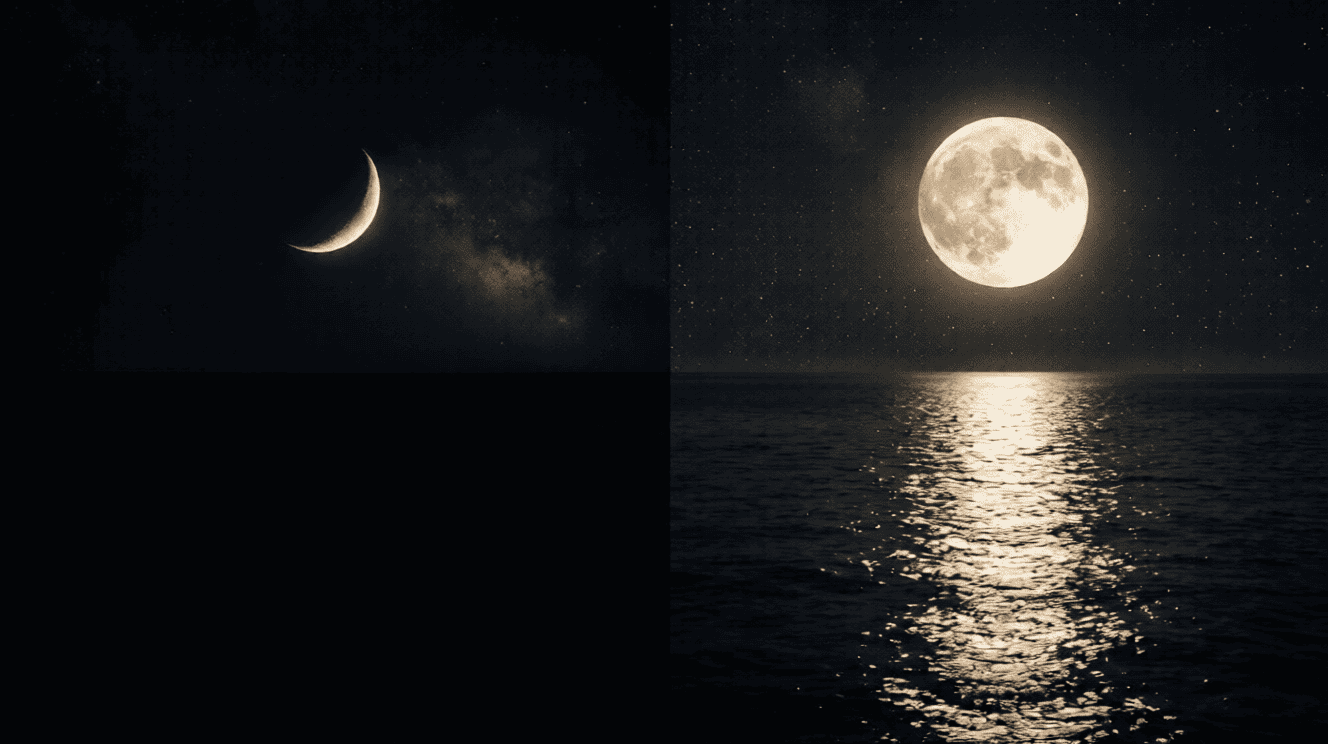
The lunar cycle begins at the New Moon, when the Moon sits between the Earth and the Sun and is invisible from our perspective. It grows through the crescent and first quarter phases, reaches its fullest illumination at the Full Moon (two weeks after the New Moon), then wanes back through the last quarter and balsamic phases until the next New Moon.
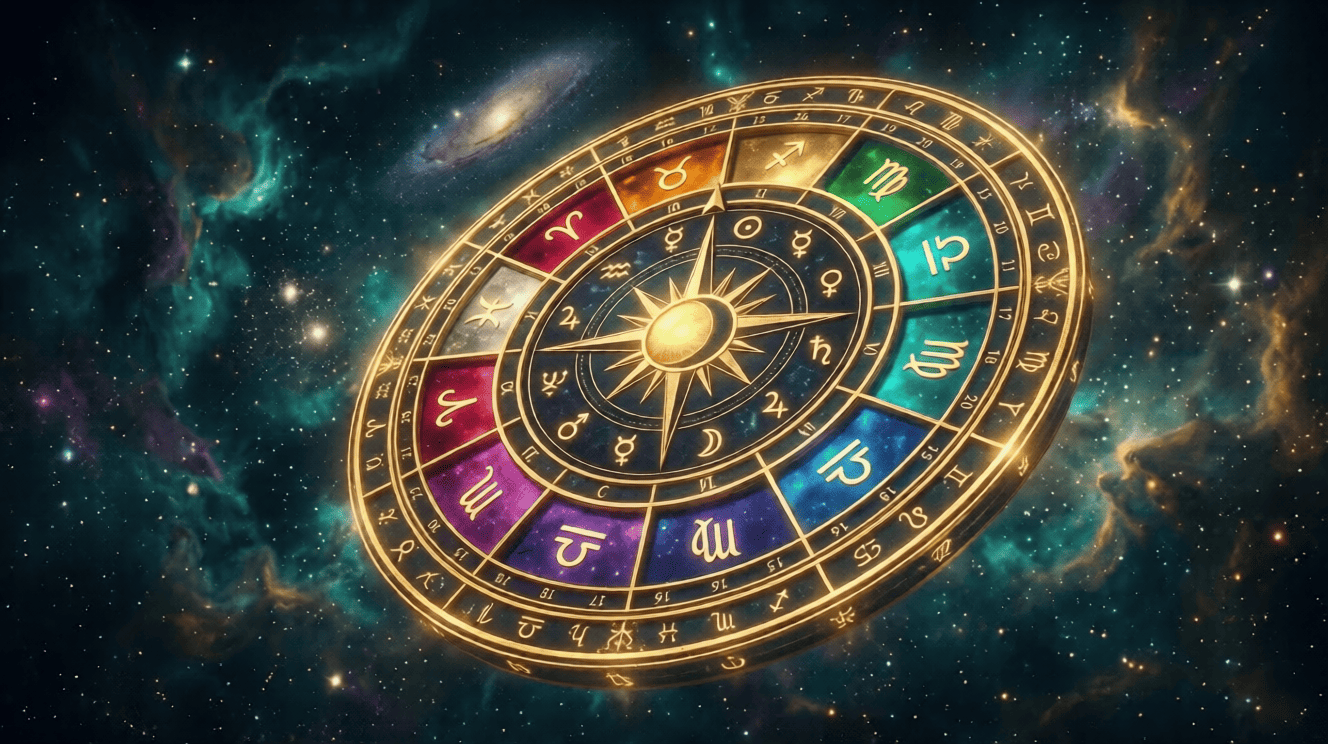
Each New Moon and Full Moon occurs in a specific zodiac sign. The New Moon is always in the same sign as the Sun (since both are aligned), and the Full Moon is always in the sign directly opposite. This matters because the sign colours the themes that each lunar event emphasises — a New Moon in Capricorn carries different energy than a New Moon in Gemini, even though the phase dynamic is the same.
You can find the dates and signs of upcoming New and Full Moons with a basic search, or look at any astrology calendar. Once you know when the next one is, you have something to work with.
New Moons: What They're Good For
The New Moon is the beginning of the cycle — a point of darkness, stillness, and potential before the light returns. In practical terms, it's the natural time for beginnings, intentions, and planting seeds for what you want to grow over the coming weeks.
The most immediately useful thing to do at a New Moon is to get clear on what you want to initiate or call in over the next four weeks. This is not about manifesting in the sense of passively wishing — it's about getting specific and intentional about direction. What do you want to move toward? What do you want to build, start, or establish?
The sign of the New Moon gives you useful direction. A New Moon in Taurus, for instance, is a good time to set intentions around finances, physical wellbeing, and creating stability. A New Moon in Libra supports intentions around relationships, balance, and aesthetic projects. A New Moon in Aries is about new personal initiatives, courage, and anything requiring you to go first.
Writing down your intentions at the New Moon is more effective than just thinking them. There is something about putting words to paper that makes an intention more concrete and more accountable. Keep it simple and specific — "I intend to..." rather than vague wishes. Some people do this as a brief ritual; others simply write in a notebook. The mechanism matters less than the act of getting clear and committing it to words.
Full Moons: What They're Good For
The Full Moon is the peak of the cycle — maximum illumination, maximum energy, maximum visibility. This is the time when whatever has been growing since the New Moon reaches a kind of culmination. Things come to light. Emotions run higher than usual. Situations that have been building tend to break open.
Full Moons are naturally good for: completions and harvests, releasing what is no longer serving you, seeing situations clearly that felt murky, and acknowledging what has grown or changed in the two weeks since the New Moon.
The releasing aspect of Full Moons is where most of the practical guidance focuses. The Full Moon is in the sign opposite to the current Sun sign, which creates a polarity — a tension between two principles. That tension tends to surface what's ready to go. If you have been tolerating something that no longer fits, carrying a grudge, holding onto an old story about yourself, or clinging to a situation past its natural end, the Full Moon tends to make the discomfort of holding on more acute.
A simple practice: at the Full Moon, write down what you want to release — what you are consciously choosing to let go of, whether it's a habit, a belief, a resentment, an attachment to an outcome, or a version of yourself that has outgrown its usefulness. Be specific. "I release the belief that I have to earn love" is more useful than "I release negativity."
The Full Cycle as a Working Unit
The most effective way to use the lunar cycle is to treat the New Moon and Full Moon as two halves of a single working unit rather than isolated events. Set an intention at the New Moon. Track how it develops over the following two weeks. At the Full Moon, assess what has come to light, what needs releasing, and what has genuinely grown. Then let the waning phase (from Full Moon back to New Moon) be a period of integration and consolidation before you plant the next set of seeds.
Over several months of doing this, you will likely start to notice patterns — themes that resurface in the same signs, intentions that consistently move and intentions that consistently stall, areas of your life that the lunar cycle seems to illuminate more reliably than others. This is when the practice starts to feel genuinely useful rather than arbitrary.
Eclipse Seasons: When the Cycle Gets Amplified
Two to three times a year, the New and Full Moons align closely enough with the lunar nodes to cause eclipses. Solar eclipses happen at New Moons; lunar eclipses happen at Full Moons. Eclipse seasons last about six weeks and tend to produce the most significant external events in the lunar calendar — arrivals, departures, endings, beginnings, and plot twists that feel less like gentle evolution and more like the universe making a structural decision about your life whether you were ready or not.
Eclipse periods are generally not the time for deliberate intention-setting in the usual sense. The energy is too unpredictable, and eclipses tend to have their own agenda. The wiser approach is to stay attentive and responsive rather than trying to drive, and to save your more intentional New Moon work for the non-eclipse lunations.
A Note on Supermoons and Other Amplifiers
A Supermoon is a Full or New Moon that occurs when the Moon is particularly close to Earth in its elliptical orbit, making it appear larger and brighter. The emotional intensity of Full Moons is often noticeably heightened at Supermoons — if you're someone who tends to feel Full Moons strongly, a Supermoon will be more so. There is no specific additional practice required; the basic approach remains the same, just with more amplitude.
What is worth knowing: the three to four days around any Full Moon are generally the most emotionally and energetically charged of the lunar month. If you find yourself having more intense feelings or more charged interactions during a particular stretch, check the lunar calendar — often there is a Full Moon nearby.